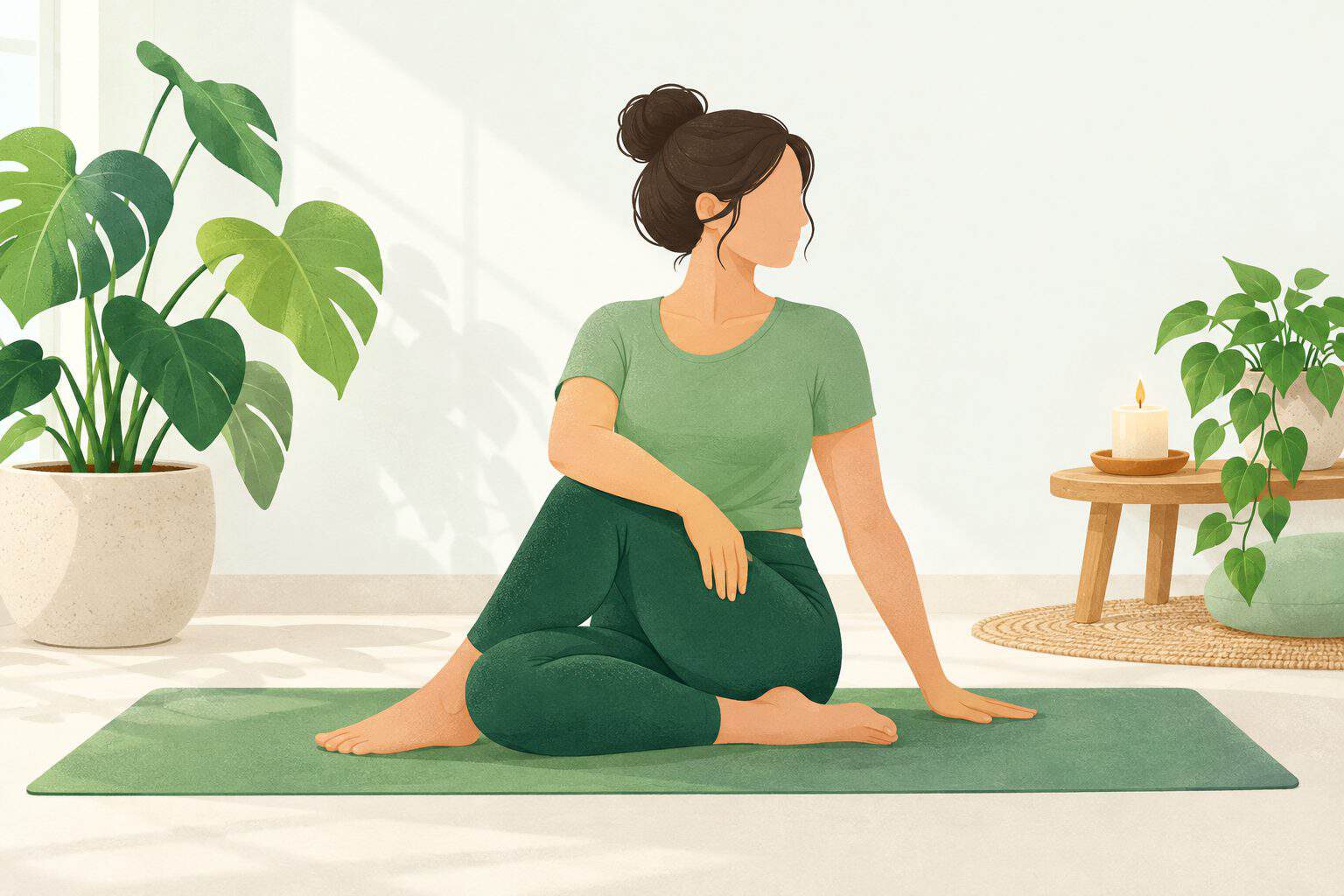
We all know that yoga is highly beneficial for our bodies and mind. However, some of us still hesitate to begin it. When we see Baba Ramdev, one of India’s finest yogis demonstrating yoga, it often leads us to believe in yoga. However, it works like magic for your body and soul, is very difficult to practice. While we may perceive yoga to be about many difficult poses and twisting, you will be pleasantly surprised to know that yoga can be done as per one’s speed and interest. Of course, there are plenty of apps and videos these days that can teach you how to begin yoga and what asanas you need to do to achieve what you want to.
10 tips for yoga for beginners
There are a few things that you need to remember before you embark on the journey of pure yoga bliss. Let’s talk about all those tips needed for yoga for beginners:
1. Understand The Core Of Yoga.
Before you start anything, you must always understand and be well-informed about what you are getting into. Since many people believe that yoga is all about fancy bends and twists, it is not true. Yoga is a lifestyle change. It is the connection between your soul and mind. You don’t have to imagine yourself mastering it in a couple of days. Yoga is a process, and you will get accustomed to it with time.
2. Learn From A Qualified Teacher.
It is always better to learn skills from a proper and qualified teacher. Especially for yoga, learning under the guidance of a certified coach can help you avoid injuries and venture deep into the basics of the various yoga asanas. The philosophies and beliefs of yoga may not necessarily align with yours. However, a qualified yoga teacher can help you understand these philosophies in a better way. However, you need to keep an open and broad mind and be willing to learn and understand! This will not only increase your knowledge but will also broaden your vision of looking at things.
3. Practice Acceptance And Release Expectations.
Yoga is all about your mind and body. When you think of starting yoga, you need to accept your body as it is. This only means that once you accept yourself and love yourself for who you are, there is no room for any kind of complaining or cribbing. Appreciate yourself every step of the way.
Keep your expectations minimal. Give yourself time to grow, and you will see yourself doing wonders.
4. Notice Your Breathing.
Whether you learn about yoga from a teacher online or a teacher next door, it is all pretty much the same.
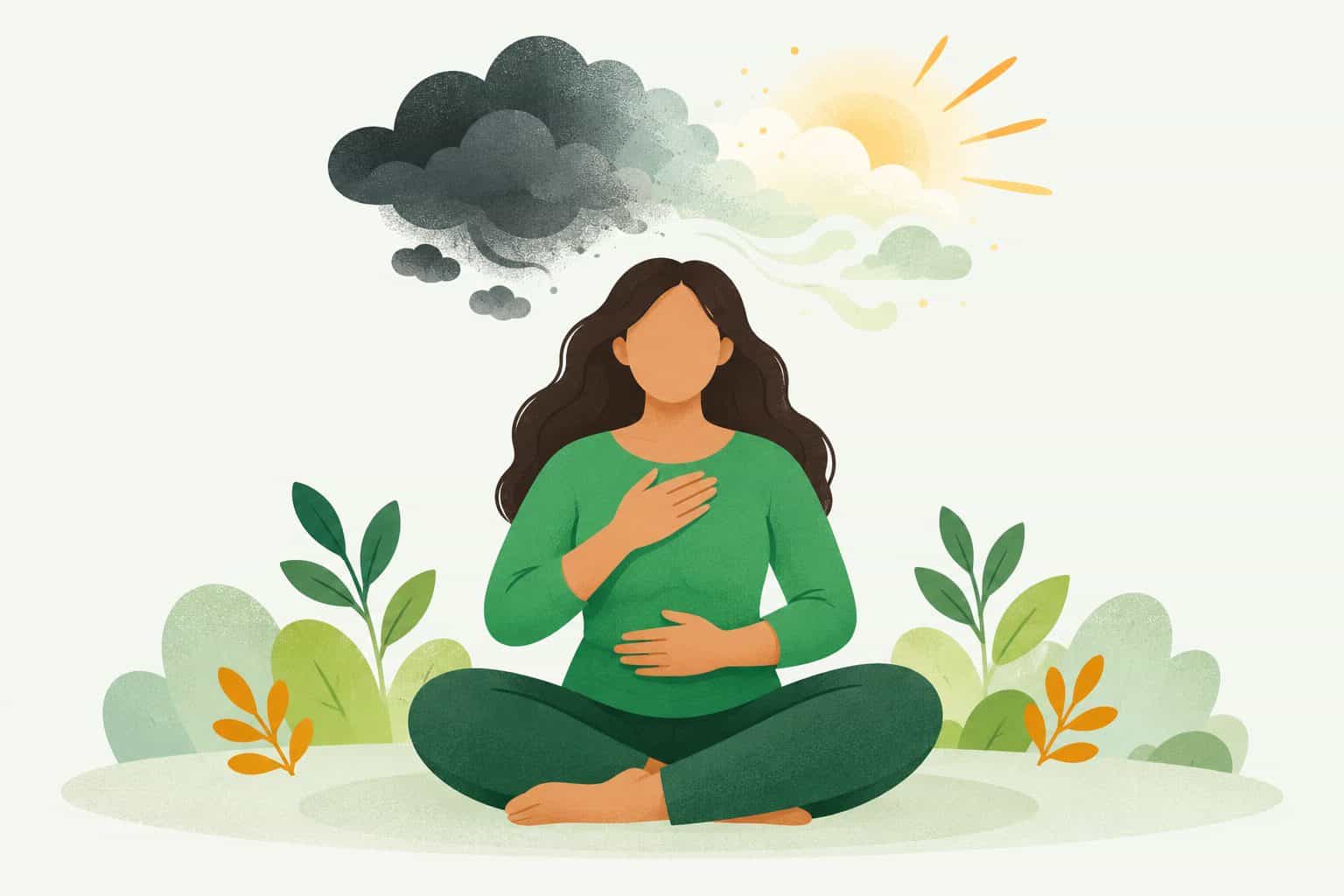
Breathing exercises are crucial, but learning to be aware of breath comes first.
From Kundalini yoga’s powerful mouth exhalation to a meditative yoga posture where your chest is filled with fresh oxygen, connecting consciousness to your breath is one of the most useful components of the practice for yoga novices.
Better sleep, less stress, and greater awareness of the present moment can all result from simply becoming more aware of your inhale and exhale.
Even if you’re unable to perform a few difficult postures, simply paying attention to your breath and carefully guiding it will have a significant impact on your overall practice.
5. Keep In Mind Your Medical Conditions.
You need to keep your yoga instructor informed about any medical condition that you may have. For example, yoga cannot be done by people who have had surgeries, sprains, or fractures. When your yoga teacher knows about your medical conditions, he can probably curate a customized yoga plan as per your health conditions.
6. Wear Comfortable Clothing.
Clothing plays an important role in the entire process of doing yoga. If you wear tight and flimsy clothes, you won’t feel comfortable at all, which will affect your mood and the asanas you do. In contrast, wearing comfortable clothing, preferably loose clothes, you can do all the yoga asanas without any irritation and obstruction.
7. Be Regular And Consistent.
Nothing will reap benefits if not done regularly. Like how Rome was not built in a day, yoga too cannot transform your body in a single day. To see the considerable effects of yoga on your body and mind, you need to be consistent and punctual. People who can’t wake up in the morning may list it as an excuse not to do yoga at all. Although the best time to do any form of exercise is in the early mornings, time constraints should never hold you back from doing anything. If evenings suit your better to start yoga, so be it!
8. Eat Light Before You Start.
To start with the breathing exercises, you need to either have an empty stomach or you must have eaten your meal at least 2-3 hours before you plan to begin yoga. It’s also a good idea to drink three to four liters of water a day to assist in removing the toxins created during your yoga practice from your system. Before doing yoga, abstain from consuming anything caffeinated or alcoholic.
9. Warm-up Before You Begin.
Yoga asanas require a loose, flexible body; therefore, Sukshma Vyayam, or gentle warm-up movements, help the body become more flexible and ready for them. To get you started, try these simple warm-up exercises:
It’s human nature to instinctively put your hand on the top of your head when a mistake is made. These symptoms indicate that your blood circulation in your brain is poor, so get yourself a massage!
Make clockwise and counterclockwise rotations of your neck to loosen it up.
Shrug off the sluggishness by pumping your shoulders and shaking your hands.
10. Smile And Don’t Compare Yourself With Others.
Being in a good mood will make your exercise even more effective. Always have a gentle smile on your face as this will relax your mind and body, and you will start enjoying whatever you’re doing.
Also, remember that every person is unique, and so is their journey of growth. All you can do and should do is concentrate on your development rather than compare it with others. Although yoga has become increasingly popular in recent times, it is not a competitive activity. Respect the process and be good to yourself.
Conclusion
Yoga could turn out to be one of the best decisions you would have made regarding your health if you chose the right path to go about it. The point is, when will you start? What are you waiting for? We all are aware of the benefits of yoga on our health and also mental peace. Then why wait? Let’s begin tomorrow!
For decades we were known to only two categories of food: Vegetarians and nonvegetarians (eggetarian were too was a term). But from the last few years or say decades we have seen a sudden incline on the word vegan. Say it online or be it an on-road campaign promoting being vegan. But what exactly being a vegan is? Let’s throw some light on this word “VEGAN”.
Going vegan means excluding all the dairy products from our diet and solely depending upon plant-based food. It is considered one of the most beneficial diets so far. Be it being nutritious or reducing the risk of several diseases. Several people have other reasons to go vegan. Some do it because of their health concerns, and to achieve some weight goal. Others due to environmental causes, concerning animals.
Recent studies of 2018, said that 4% of the population in the United States have already gone vegan, and are promoting plant-based diets. It’s because vegan food is comparably rich in nutrients and drastically low in fats. Though, to have a sustainable life, you need to have other things than just a few nutrients, including iron, calcium, vitamins. The things which are majorly present in meat. So, in this article, we will let you know what someone should look for before going vegan and explain what a vegan diet is.
Vegan diet:
Vegan, which is now emerging as the new lifestyle generally excludes all animal, dairy products from your meals, diet. But vegan means eating foods that are made up of only plants. Such people, who go vegan for environmental clauses and not for any weight goals, are most probably to avoid clothes, like leather jackets, boots, etc. soaps, beauty products made up from any source of animals.
And the one who goes vegan for a physical change, then they are most likely to see some drastic changes in the body. Such, vegan diet includes lots of fruits, vegetables, seeds, and beans which are good for digestion. This will help you in maintaining all the essential nutrients as well as vitamins. Below are a few benefits of living on a vegan diet:
A vegan diet providing you exceptional nutrients:
No matter how much we glorify going on Vegan, it is no doubt the hardest. When you go vegan, you have to leave every other dairy product. And thus there are chances of not being fulfilled with nutrients. You will be dependent on whole grains, fruits, and vegetables. Now, when you will eat more of these, which is not otherwise present in the usual western diet. You will be filled with extra nutrients., like more fiber, plant compounds, and some beneficial antioxidants. Studies have also shown that vegan diets are richer in vitamins a, c, e, and essentiality of the body like magnesium, potassium, folate.
Each vegan diet is different from the other one. The poor vegan diet might not fulfill all the essential fatty acids or even vitamins, niacin, riboflavin, calcium, zinc, selenium, etc. which are quite necessary for a balanced diet. This is why most people don’t trust vegan diets or call them overrated. It’s because they don’t follow or make a good vegan diet, covering all the essential nutrients.
Healthier heart:
Recent studies 219 have shown tremendous benefits for the heart when it comes to the vegan diet. In it, the one who takes plant-based food more than animal or dairy products is likely to be at lower risk of heart disease as well death.
According to the American Heart association, animal products like meat, dairy contain a lot of saturated fats which is likely to be the reason for heart disease. Eating these foods leads to increased cholesterol levels, and it eventually leads to heart stroke and whatnot. Plant-based food is rich in fiber and thus along with being better for overall health, is great for heart health too.
When you’re on a vegan diet you take calories lower than ever, and thus you are bound to lose weight and not muscle mass. Let’s learn more about it below.
Vegan diet, to lose excess weight:
Many people go vegan by their sole choice, and that is to lose weight. As mentioned above you are on a calorie deficit, while you are on a vegan diet. So automatically our BMI is lower than an average person and now you are on a lighter note of the risk of obesity or another related disease. People do go on a vegan diet just for the sake of weight loss, but its immense benefits are the reasons for staying vegan.
No doubt vegan diets are often the most effective way to lose weight. Recent studies have also shown that vegetarian or vegan diets have shown the best results when compared to 5 different types of diets for weight loss. A normal vegetarian person, not following a strict diet, has healthier skin, hair and also loses more and more weight.
Less chance of getting any type of cancer:
WHO has said that almost one-third of all and any type of cancer can be prevented just with slight changes in your diet. In fact, it’s not just about cancer, any type of disease can be prevented if we follow a healthy lifestyle, including our cravings. Colorectal cancer can be reduced to almost 9-18% just by and legumes to your meals daily. If one such pulse can save you up from a higher risk of disease than man, the other effects of religiously following any specific diet.
Studies have also shown that just eating at least 7 portions of veggies and fresh fruits per day can reduce your risk of dying from cancer by 15%. The vegan diet is all about plant-based food products and they have more legumes, pulses, fruits, vegetables in their diet and thus it also helps in fighting cancer and also maintaining general health.
Soy products save you from breast cancer. Replacing animal products can help you reduce the risk of prostate, breast as well as colon cancer.
Though the conclusion was that every other vegan person won’t ever get cancer. All these studies have different results, as they have been made by observing different persons.
You must have your reasons for going vegan, and not just go vegan looking at its benefits. If you don’t follow a vegan diet with your wish and will, then you will hardly see any of the great benefits.
Exercising is extremely important for a healthy lifestyle. Don’t we all keep hearing this now and then? We all want to start working and stay fit, but going to the gym could be a point of laziness. Therefore, figuring out a way to work out at home could be a game-changer. There are many workouts that you can do from the comfort of your home without using any equipment. It’s easier than you might imagine getting in a brief cardio session at home during your downtime. Working out at home is a great option if you want to take advantage of all the benefits of a cardio workout while also saving some cash. Don’t worry; you don’t need a lot of room or expensive equipment to have a good cardio workout.
What is a Cardio Workout?
Cardio is a type of workout where your breathing and heart rate increase while improving the function of your heart, circulatory system, and lungs. Here are some of the benefits of cardio exercises:
It is a great and enjoyable way to lose weight.
Cardio exercises help reduce the risk of heart attacks and diseases caused by high blood pressure and cholesterol.
Since these exercises relate to your heart and blood cells, they help in strengthening your heart.
They help in keeping your body and mind energized.
Cardio workouts have proven to be crucial for your mental health.
They also help in strengthening your immune system.
Since cardio exercises are intense, they also induce better sleep!
If you have decided to start your cardio workout at home, all you need to do is list down all those cardio workouts that can be possible from the whims and fancies of your home itself. To make your work easier, here is a list of 7 great cardio exercises that you can work out from home:
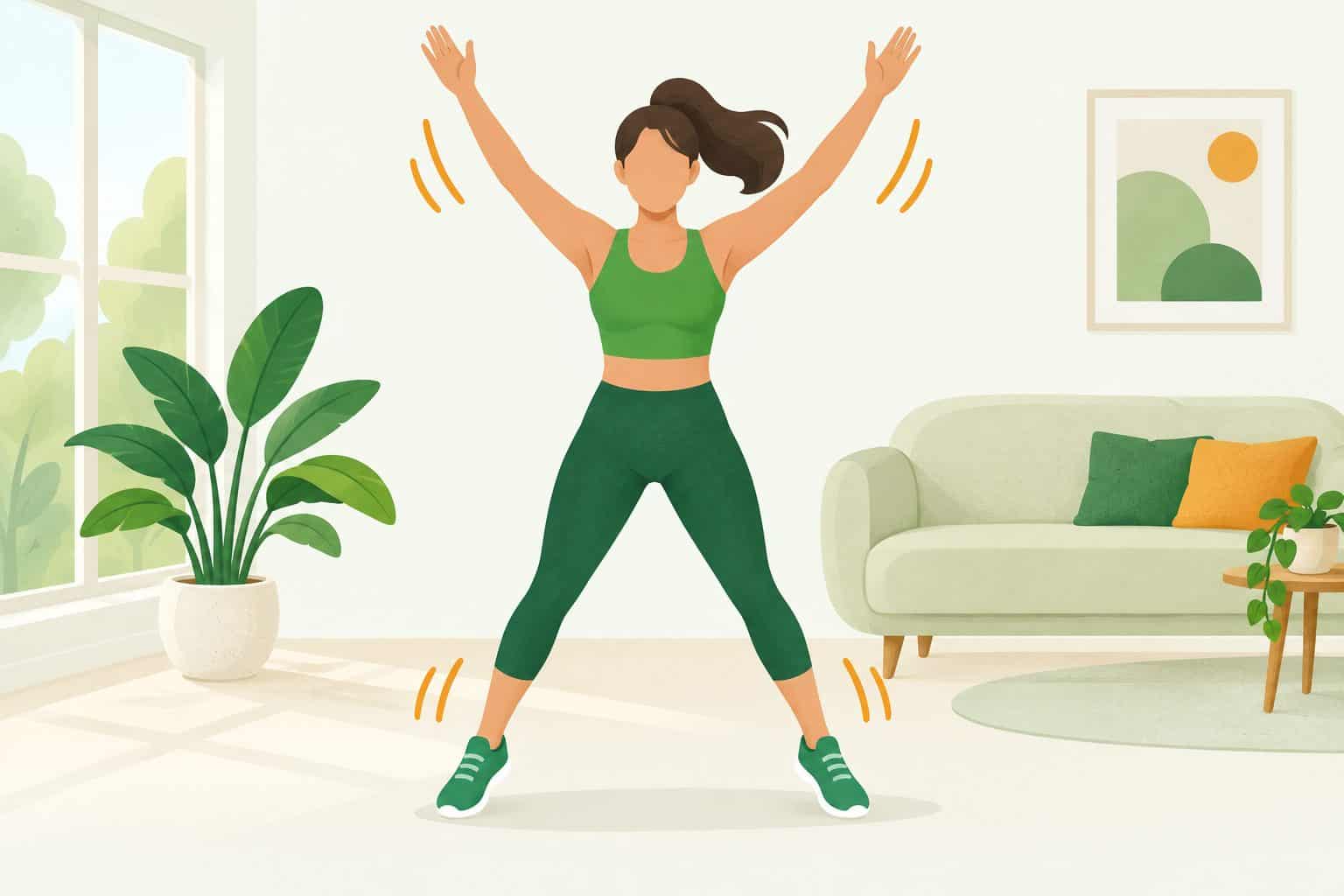
Jumping Jacks
Jumping Jacks are fun and are more likely to remind you of your childhood! They also help in burning 100 calories per 10 minutes of jumping jacks! What is even better is that you need no equipment for it and can start anytime and anywhere!
How to do it?
With your legs together and arms by your sides, stand upright!
Be sure to jump into the air while keeping your knees slightly bent.
You should be roughly shoulder-width apart as you jump. Make a wide arc with your arms above your head.
Return to the original position with a jump.
Repeat the process all over again.
Burpees
The recipe of a burpee is essentially made up of four ingredients: a jump, a squat, a plank, and a push-up.
While performing numerous burpees in a row might be exhausting, burpees can be worth all the sweat and hard work if you want to increase strength and endurance while burning calories and improving your cardio fitness.
How to do it?
Align your head with your heels and stand straight with your feet shoulder-width apart.
Hop up and land back softly into a squat.
With knees more expansive than your elbows and hands facing down, kick yourself back and land into a plank.
Do a nice push up there and jump your knees outside of your elbows so that your knees track over your toes.
Jump back up into the standing position.
Skipping
Didn’t we all do this during our school days? Yes, back then, we never realized how good skipping is for our cardio health, but now we do!
How to do it?
Have a skipping rope handy.
Never jump higher than the thickness of the rope. The higher you jump, the more energy you waste.
Stay and jump low to the ground.
Keep your elbows in at your waist, your arms at a 90-degree angle. Now your hands are ready to create circular movements, which is what skipping is all about.
You need to stand straight and look straight, not bending too forward or backward.
Hold the rope in your hands and start skipping!
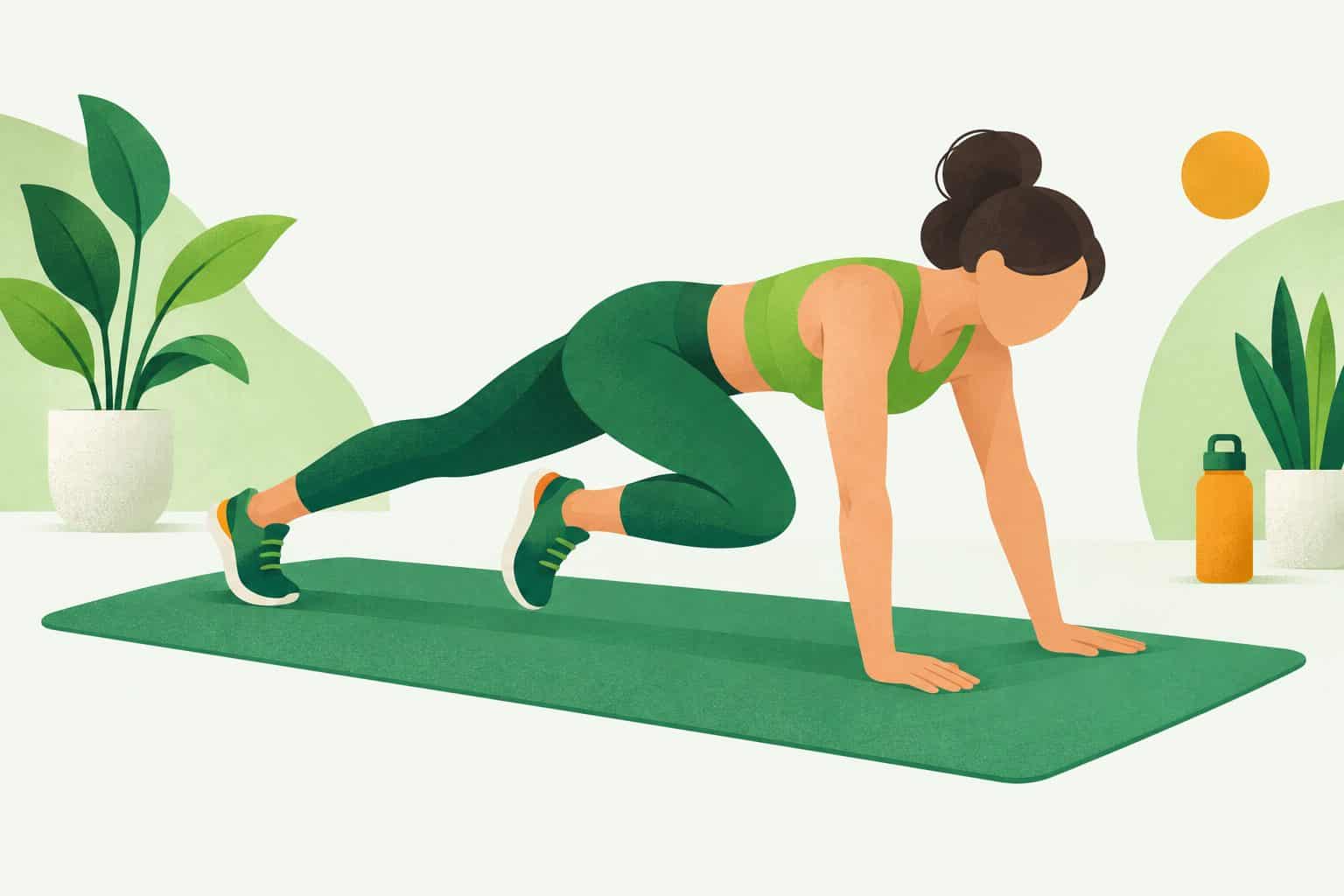
Mountain Climbers
Since you cannot literally climb a mountain, mountain climbers will make you feel like you are actually climbing a mountain. Mountain climbers can be extremely beneficial to give you the much-needed core strength and build your muscle.
How to do it?
Start by getting into a plank position.
Ensure that your weight is evenly distributed between your hands and toes.
With your hands shoulder-width apart and your abs engaged, keep your back flat and align your head properly.
Next, your left knee needs to be pulled closer to your chest as much as possible.
Now interchange your legs. Pull one knee in and one knee out!
Keep your hips low and as quickly and as far as you can run your knees in and out. With each leg change, inhale and exhale alternately.
Lateral High Knees
Lateral High Heels are a great way to balance both your fitness quest and your coordination as well.
How to do it?
Start by facing the sideways while standing on your left leg with your knee slightly bent.
Bend your right leg at the knee, and your hip should be lined up with your knee.
Your left arm should be straight, and your right arm should be bent. Also, your chest should have your right hand in front of it.
As you take a step forward, lift your right leg to the height of your hip and switch your arms.
Plank Jacks
Plank Jacks are an exciting addition to the regular plank movement. Planks become a core-cardio routine when you incorporate some easy training into them.
How to do it?
Get into a high plank position with your feet mat-width apart.
Now, all you have to do is remain in the same position and hop back your feet in and out.
Continue the same for 30 seconds and increase as you get stronger and better at it.
Squat Thrusts
If you are overwhelmed with burpees but want to do a simpler version of a burpee, you can try squat thrusts. They are a great alternative to the highly intense burpees. Once you master squat thrusts, you can go ahead with mastering burpees too!
How to do it?
Get into a plank position. Keep your wrists and elbows below your shoulders.
Keep your legs straight and your core tight.
Bend your knees forward and jump into a low squat.
Get into the plank position again and repeat.
Dancing
Dancing is perhaps the most exciting kind of exercise that one can do. There is no particular tutorial on how you are supposed to dance. Just pick songs and watch some YouTube videos, and you are good to go! Dancing helps in burning plenty of calories. Zumba, aerobics, and dance fitness- truckloads of videos available for such fitness workouts on the internet. Follow them, dance, and burn those excess calories!
Conclusion
If you really want to start exercising, cardio exercises are not so strenuous and are enjoyable too! Always remember, health is wealth, and wealth is money. Most often, we get lazy when going to the gym. This article lists some of the best cardio workouts that you can do at the leisure of your home. So, go ahead and start tomorrow!
Who doesn’t want to live a long and peaceful life? Almost all of us want to live life king size and be happy. However, considering our current lifestyle, is it possible to live long? Most of us do not follow a proper work-life balance, eat healthily, and have good sleep cycles. All of these have a profound effect on your life’s quality and quantity. We don’t realize that the peace we often look for subconsciously is present within us itself. All we need is a catalyst to drive that peace. Yoga can pretty much be that catalyst that can keep your mind and the outer surroundings in harmony and peace.
Yoga also increases the lifespan of an individual. How? Because if one follows the principles of yoga religiously, then things like stress, unhappiness, etc., will automatically vanish from their lives. And happy people live for longer; we all know about it! Let’s talk about how yoga contributes to an increased lifespan.
8 Reasons How Yoga Helps In Increased Lifespan
Whether you practice yoga daily or have just taken your first yoga class, you’ve probably noticed some benefits – a relaxed state of mind, better sleep, or more energy. Although we, as ordinary people, are still in the process of discovering the many benefits of yoga, Western science is uncovering clues about this ancient practice and its effect on longevity and lifespan. Here are just eight of the many benefits that influence longevity and promote a long, healthy life.
Improves Bone Health And Density.
Many yogic positions require you to bear weight, strengthening your bones and keeping you from developing osteoporosis later in life. When it comes to enhancing arm bones, yoga is especially beneficial because these are particularly susceptible to osteoporotic fractures. A large body of research shows that regular yoga practice improves bone density in the body.
Strengthens The Lymph And Immune Systems By Reducing Inflammation.
Yoga moves your body in a way that drains lymph, helps the immune system fight infection, destroys damaged cells, and gets rid of toxins. Meditation also appears to positively impact the immune system’s performance, both elevating antibody levels in response to a vaccine when needed and decreasing them when necessary.
Blood sugar levels are lowered.
Through yoga, you can reduce your blood sugar and LDL cholesterol while increasing your HDL. By decreasing cortisol and adrenaline, yoga has lower blood sugar levels in people with diabetes. It also promotes weight loss and improves insulin sensitivity. Diabetes consequences such as heart attack, kidney failure, and blindness can be reduced by lowering blood sugar levels.
Enhances Your Sense Of Equilibrium.
By practicing yoga regularly, you will enhance your proprioception (the capacity to feel where your body is in space) as well as your balance. Having a better balance may lead to fewer accidents. When we speak about older people, this means living longer and delaying or even avoiding the need for a nursing facility altogether.
Calms The Nervous System And Facilitates Deeper Sleep.
Modern society’s stimulation is taxing on the nervous system. Because yoga and meditation teach you to focus on the interior journey of your senses and remove all external stimulation, you will have more energy, be less stressed, and have fewer accidents.
Healthy Lifestyle.
Inspiring and improving self-care and healthy living are two of yoga’s most valuable benefits. Those who practice yoga are more likely to take an active role in their health and well-being, encouraging them to make healthier lifestyle choices. A healthy lifestyle has a long-term effect on life expectancy, as evidenced by numerous studies.
Studies have shown that practicing yoga consistently can help people live longer lives and have a higher quality of life. Knowing some of the many advantages of yoga may help motivate you to get on your yoga mat. Feel good about yourself because you do something good for your body by doing “post-yoga bliss.”
Improves Your Breathing.
Fewer breaths taken at a higher volume are beneficial to yogis since they are both relaxing and effective. Yoga breathing has been demonstrated to benefit persons with congestive lung failure and improve lung function parameters such as maximal breath volume and exhalation efficiency. Yoga encourages nasal breathing, which cleans, warms, and humidifies the air as it passes through the lungs. Whatever allergens and dirt you don’t want in your lungs are removed as a result, and asthma attacks are reduced.
Improves Digestion.
When you practice yoga, your digestion will improve because you will be moving your body in a way that allows food and waste to move through your system more quickly and efficiently. Dietary fiber and healthy digestion assist in reducing the risk of cancer of the colon and other digestive tract illnesses.
After reading the above points, there is no doubt that yoga plays a significant role in increasing your lifespan. Now, let us quickly list five yoga postures that will help you live a high-quality, long life.
5 Yoga Postures That Will Increase Your Lifespan
Anulom Vilom
Also referred to as Pranayam or the breathing exercise, Anulom Vilom has a significant impact on strengthening the respiratory system and also calming the nervous system. It also helps in getting rid of headaches and oxygenating the blood.
Surya Namaskar or Sun Salutation.
Surya Namaskar is the king of all exercises. Surya namaskar helps in regulating your period cycle while also facilitating weight loss. A salutation to the sun can improve the blood circulation in your body and help you deal with anxiety as well.
Uttanasana(Standing and Forward Bent Posture)
The benefits of uttanasana are immense. It helps strengthen the knees and spine, improves the functioning of the endocrine and the nervous system, and helps calm your back, shoulder, and neck.
Uttanasana also tones and activities the muscles of your abdomen helps in stretching the muscles of your calves and hamstrings.
Kaki Mudra.
Kaki Mudra is perhaps the most enthralling one because it helps in toning the muscles of your face. It also strengthens the nasal passage and the respiratory system. Quite interesting, it also helps in cleansing the 5th chakra.
Sarvangasana or The Shoulder Stand Posture.
Sarvangasana allows optimum blood and prana flow to the brain. It calms and revitalizes the brain and cures various brain illnesses. It enhances the brain’s capacities. Relieves tiredness and improves memory. During this asana, you can hear the Anahat noises. It preserves youth and power by maintaining celibacy and controlling nightfall during dreams.
Conclusion
Yoga has been around us for ages, and not many of us actually understand the value of it. However, it is never too late to start practicing yoga as much as possible and in whatever capacity. Yoga is a lifestyle, a way of living. The sooner we adapt it, the better!
If you look at food as a medium for a healthy lifestyle, you will look for naturally grown foods that burst with the right nutrients and taste. Would you want to buy fruits and vegetables grown in soil that has been constantly sprayed with pesticides and herbicides? Or would you rather buy fruits and vegetables that have been grown most naturally? Well, most of us would go the natural way. This is what organic food is all about!
What Is Organic Food?
Produce that has not been tainted by chemical fertilizers, pesticides, or preservation agents is considered organic. As defined by the USDA, organic food standards in the United States vary widely. It’s possible for food to be 100% Organic, Organic (with at least 95% organic ingredients), or Made With Organic Substances (at least 70 per cent organic).
Let us now look at the top ten reasons why organic food is best not just for your body but for the planet as well!
10 Reasons To Consume Organic Food
There are many reasons why one must consider eating only organic foods. Let’s discuss few most essential ones:
Chemical Free
If you want to get rid of the chemically grown traditional food, eating organic foods is the only choice you have. Conventional foods involve the use of pesticides and harmful chemicals. Cancer, digestive issues, headaches, ADHD, birth deformities, reduced immune system, and even early mortality are associated with pesticide intake. Organic foods are devoid of pesticides and hence better for your overall health.
More Nutritious
Since organic food does not contain genetically modified ingredients, it has a higher nutritional value than conventional agricultural food products, such as meat, milk, fish, and poultry. The fact that they are allowed to mature and are given the optimum natural circumstances for development contributes significantly to their high nutritional value. As soil life and health provide the ideal mechanism for crops to acquire soil nutrients, organic food products always have high vitamin and mineral contents.
GMO-Free
Organic foods are free of genetically modified organisms (GMOs), which was not created through natural processes. Genetically modified foods are a major source of public concern nowadays. To increase resistance to pesticides/herbicides, foods and plants have their DNA altered in ways that don’t occur naturally. Food safety advocates are worried that no long-term research has been done to confirm their safety, despite the lack of clear proof of their risks.
Better In Taste
If you want to experience the difference in the taste of an organic fruit/vegetable against a conventionally grown one, try tasting an organic and non-organic version of a cucumber or a tomato or an apple. You can easily make out that organic foods are tastier and full of original flavours compared to their traditional counterparts.
Because organic produce isn’t treated with pesticides before harvesting, it ripens fully in the field before being harvested and delivered to you by eliminating shipping and gassing to stimulate ripening and holding in storage.
Rich In Antioxidants
Scientific studies have shown that antioxidants improve general health, particularly when those antioxidants come from organic foods. In other words, because of the absence of synthetic chemicals, organic foods have a higher concentration of antioxidants because they do not react with vitamins, organic compounds, or minerals.
According to the latest research, studies show that eating organic food increases the intake of nutritionally beneficial antioxidants and reduces exposure to heavy metals. Preventing heart disease, cancer, visual difficulties, premature ageing, and cognitive dysfunction are only some of the benefits of antioxidants found in organic foods.
Best For Overall Health
Chemical pesticides and fertilisers are not used to manufacture or prepare organic food. Therefore it is free of dangerous chemicals and has the potential to have a negative impact on human health. Pest and disease control can be improved by using natural methods such as green manure and crop rotation, which are excellent for generating safer, healthier, and more odoriferous end food products. Furthermore, nutritious food simply means healthy individuals and better nutrition for a better life for both humans and animals.
Avoid Hormones, Antibiotics And Drugs In Animal Products
Like how humans use vaccinations and antibiotic drugs to keep themselves safe from any kind of virus or bacteria, similarly, conventionally produced fruits and vegetables are also injected with chemicals, vaccines, antibiotics and growth hormones to facilitate fast growth.
When humans consume these non-organic foods, they also consume the growth hormones, antibiotics, chemicals etc., that were used to grow these non-organic foods. In the long run, all of these things can weaken a human’s body and expose him to various deadly diseases. When one consumes organic food, they are free from consuming any kind of growth hormones or vaccines because organic farming does not involve any kind of artificial ingredients at all!
Support Farmers And Agriculture
The majority of organic farming is done by farmers in their farms in most of the countries. By opting for organic foods, you are indirectly helping the farmer community by giving them more profit margins and increased workload. You also help create a demand in the agriculture sector, which helps many people and families in need.
Stronger Immunity
Traditional or industrial farming approaches strive to maximise farm output and production. For example, food insecurity may be alleviated by increasing cereal production, meat production, and fruit size through genetic engineering and growth hormone use. The short-term impacts are increased sensitivity to allergens and a weakening of the immune system.
Eating organic foods reduces the risk of immune system deterioration because they are not manipulated in any way. Organic foods also contain more vitamins and minerals, which help to boost the immune system.
Irradiation
There is no irradiation in organic food. Ionizing radiation is used to irradiate food. During this time, you’ll be in a processing room. X-rays or gamma rays disrupt chemical bonds in food during the irradiation process, intended to limit the number of bacteria. Radiation is a potential carcinogen, and that’s why people are worried. The USDA’s definition of organic does not include irradiated food.
When food irradiation is appropriate, the USDA and FDA collaborate. In addition, the USDA regulates the use of the term “organic” on food packaging and labelling. It doesn’t matter how they’re grown or produced; irradiated foods can’t be called organic by the USDA.
Conclusion:
Consuming organic foods can change your life to an extreme level and protect you from unnecessary diseases and problems. Nature has a lot to offer to us. We only need to respect that and use it to the maximum!
Are you also done with those love handles, and trying to tuck in your stored fat with high-waisted jeans?
Well, you are not the only one. But you don’t want to be one of them, Right?
Belly fat is indeed hardest to lose, and most dangerous to keep. If there’s plenty of fat stored, then your internal organs are definitely in danger. Fat doesn’t let them function properly. You need a healthy lifestyle as soon as possible. You can see that unattractive bulges around your waist, also known as visceral fat. This fat circulates all around your bloodstream, which puts you at great risk of diabetes and major heart disease as well.
You must have thought and imagined having a toned, bulging free body. But if you think of specifically having that, then sorry to break this to you but spot reduction is a myth. You can’t lose fat from a spot. You lose overall weight from your body. Yes, there are core targeted exercises that will give you a stronger as well as tight core within a few weeks of practice.
So, if you are ready to put your sweat and hard work into losing that stubborn belly fat. Then below are 7 best exercises to lose belly fat fast and sustainably:
1. Burpees
Burpees is a high-intensity exercise. It requires your full-body movement. With your core, chest involved in this exercise, there are high chances of feeling sore in your arms, chest, shoulders, thighs.
Here’s how you can do it easily:
Stand straight with your feet apart covering the distance as much of your shoulders, in a low squat position forwarding your shoulders.
Place your hand on your waist. With a hop put, your chest will be touching the floor.
Take a push against the floor and try to lift your body, jumping your feet outside your hand.
In the same position, jump overhead in the air resulting in your hand waving above your head.
2. Abdominal crunches
Abdominal crunches, also known as ab crunches are the most versatile form of exercise for anyone. From beginners to intense workouts, it is included in every routine. It’s beneficial for reducing your lower back pain and strengthening your spin. It helps you reduce fat by a lot of calories.
Steps to do ab crunches:
Place your back over the ground, knees bent and apart according to your hip width.
Place your hand below your hand, locking them out, elbows open.
With a deep breath, lift your torso. Head still on the ground and not putting too much pressure on your neck. Try to engage your core muscles as much as you can.
Do at least a few sets of it. Minimum 50 repetitions to have great results within a few weeks.
3. Bicycle abdominal exercise
Bicycling is one of the most suggested activities if you want to lose overall weight and be healthy. Bicycle abdominal exercise focuses mainly on your core and shredding fat.
Continuing from abdominal crunches, keep your hand behind your head only.
Hold your knees above, closer to your chest.
Straighten one leg, and bring the other leg closer to your chest.
Do the same exercise in sets. At Least 20 on each side, to see visible changes.
4. Mountain climbers
Plank is said to be the most engaging exercise for the core. But moving planks puts more pressure on your core, strengthening it. Mountain climbers are a type of moving plank only.
Starting with a high plank position, put your palms, or wrist under your shoulder.
Pull your belly button in, while tightening your core.
Bring your right knee over your left chest, and do the same with the other knee.
Repeat this at least 50 times. 25 steps each knee.
5. Russian twist
If you have been working out for quite some time. You must know about this exercise. One of the most basic yet most effective exercises to lose belly fat fastly. It’s a core-oriented exercise. The main goal is to improve the overall strength of the oblique. It is done by rotating your torso. Let’s see the steps to do it.
Sit with your knees straight on the ground. Now come in a bent position, putting your heels, feet off the ground.
If you have a ball, hold it. Or either join your hands and hold your upper body with them.
Take a small lean backward, maintaining a 45degre angle.
With this position, turn your torso opposite to the side of your hand movement.
When you do this, try to squeeze your oblique as much as you can.
Remember, it is a core engaging movement, and try not to include your arms.
6. Medicine ball burpees
If you really want to have a toned body, with increased metabolism. Then medicine ball burpees can help you a lot. Research has shown magnificent results when you add a medicine ball to your burpees.
Steps to do medicine ball burpees:
Come into a burpee position, i.e standing with your feet shoulder-distance apart. Hold the medicine ball.
This time instead of putting pressure in the air, move the ball above and slam it on the ground with full force.
As you slam the ball, move forward and get into a seated position with the help of your butts.
Jump off on a high plank position with your hand on the ground this time.
Get into a squatted position, with a jump-off with your feet.
Get your ball, and move it above you, repeating the slam.
7. Sprawls
Researchers have said that “It takes the traditional burpee to the next level by having you touch your chest to the ground, then push-up to plank as you continue the move”. Sprawls are said to be burpees, but this time engaging your full body. It’s another high-intensity workout. It involves various muscle groups so that one can burn maximum calories at one go. It’s a great exercise for shaping and toning down the upper as well as lower body.
Here’s how you can start doing it:
Get into a burpee position, needless to explain.
Get into a squat, with your hand on the ground.
Jump back into a plank position, then again jumping back into a squat position with your hands on the ground.
With a jump, stand straight.
This is how you have to repeat multiple sets to see some amazing results.
These were calorie-burning exercises to get your toned body. Along with this, try to be in a calorie deficit to see great results.
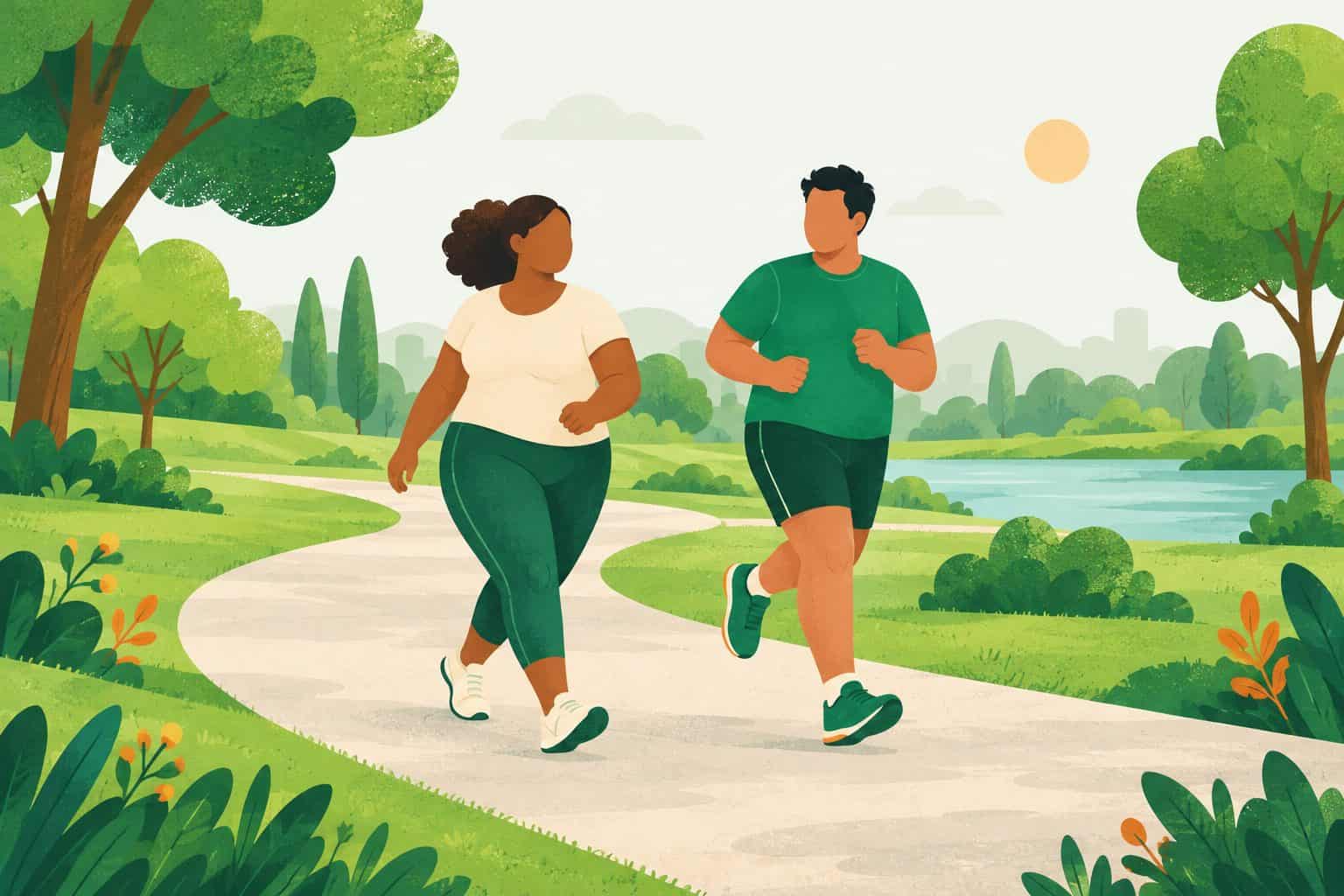
“Should I walk or run?” is one of the most common fitness questions — and the answer is more nuanced than most people expect.
If you’ve been putting off exercise because you feel like you need to run to get real results, this article might change your mind. And if you’re a runner wondering whether walking could ever match up, the science has some surprising findings.
The short answer: fast walking and running are both highly effective forms of exercise. Which one is better depends entirely on your goals, fitness level, age, and physical condition. For many people — especially those who are just starting out, carrying extra weight, or managing joint issues — fast walking is not just a substitute for running. It can actually be the superior choice.
Here’s a complete, evidence-based comparison of fast walking vs running across every dimension that matters.
Fast Walking vs Running: The Key Differences
Before comparing benefits, it helps to understand what separates the two. The technical distinction is simple: when you walk, at least one foot is always in contact with the ground. When you run, there is a brief moment where both feet are off the ground — a “float phase.” This seemingly small difference has significant implications for calorie burn, joint impact, and injury risk.
Fast walking (also called brisk walking or power walking) typically means walking at a pace of 6–8 km/h (4–5 mph). At this pace, your heart rate is elevated, you’re breathing harder than normal, but you can still hold a conversation.
Running begins at approximately 8–9 km/h (5–6 mph) and can go much faster. At running pace, calorie burn increases significantly — but so does the impact on your joints.
Calorie Burn: Walking vs Running
This is where running clearly wins — but the gap is smaller than most people think, and context matters enormously.
Running burns more calories per minute. A 70 kg person running at 10 km/h burns approximately 590–650 calories per hour. The same person walking briskly at 6.5 km/h burns approximately 280–320 calories per hour.
But walking burns comparable calories per kilometre. Here’s the surprising part: when you compare calories burned per kilometre rather than per hour, the difference narrows significantly. Running a kilometre burns roughly 70–80 calories; walking the same kilometre burns roughly 50–60 calories. The difference is about 20–30% — not the massive gap most people assume.
And walking allows you to go much longer. A beginner can walk for 60–90 minutes without stopping. Running for 60–90 minutes is demanding even for experienced runners. So the total calorie burn over a session often ends up similar.
Metric
Fast Walking
Running
Calories/hour (70kg person)
280–320
590–650
Calories/km
50–60
70–80
Typical session length (beginner)
45–90 min
20–40 min
Total session calories (beginner)
250–400
230–380
Joint impact
Low
High (2.5x body weight)
Injury risk
Very low
Moderate to high
Joint Impact and Injury Risk
This is where fast walking has a decisive advantage — especially for people over 40, those carrying extra weight, or anyone with knee, hip, or ankle issues.
When running, each footstrike transmits a force of approximately 2.5 times your body weight through your joints. For a 70 kg person, that’s 175 kg of force hitting your knees, hips, and ankles with every single step — thousands of times per run. Over time, this cumulative impact is the primary cause of running-related injuries.
Studies consistently show that runners have a significantly higher injury rate than walkers. Common running injuries include runner’s knee, shin splints, stress fractures, IT band syndrome, and plantar fasciitis. These injuries are rare in walkers.
Fast walking produces approximately 1.2 times body weight impact per step — dramatically less than running. This makes it genuinely suitable for people who have been told to avoid high-impact exercise, those in their 40s, 50s, and beyond, and anyone returning from injury.
For desk workers who already spend hours in a hunched, static position — adding high-impact running to a deconditioned body is a recipe for injury. Starting with fast walking and building gradually is a far smarter approach.
Cardiovascular Benefits
Both running and fast walking provide significant cardiovascular benefits — improved heart health, lower blood pressure, reduced risk of type 2 diabetes, and better cholesterol profiles.
A landmark study from the Lawrence Berkeley National Laboratory found that brisk walking reduced the risk of heart disease, high blood pressure, high cholesterol, and diabetes by similar amounts to running — when energy expenditure was matched. In other words, if you burn the same number of calories walking as someone burns running, your cardiovascular benefit is essentially equivalent.
For heart health, the key factor is not speed but consistency and total energy expenditure. 30 minutes of brisk walking five days a week delivers substantial and well-documented cardiovascular benefits.
Weight Loss: Which Is More Effective?
Running burns more calories in less time, which gives it an edge for pure weight loss — in theory. In practice, the picture is more complex.
Running has a higher injury rate, which frequently interrupts training. It also tends to increase appetite more than walking, which can offset the calorie deficit. And many beginners find running so uncomfortable in the early weeks that they give up entirely.
Fast walking, on the other hand, is sustainable. People actually stick to it. And for long-term weight management, consistency matters far more than intensity.
The optimal approach for weight loss is progressive walking with increasing pace and duration — starting with 30-minute brisk walks and gradually extending to 45–60 minutes. Once a solid aerobic base is established, jogging intervals can be introduced. This approach produces better long-term results than jumping straight into running and burning out.
Both forms of exercise produce significant mental health benefits through the release of endorphins, reduction of cortisol (the stress hormone), and improvements in sleep quality. However, there are some differences worth noting.
Running, particularly at higher intensities, produces a stronger and faster endorphin response — the well-known “runner’s high.” For experienced runners, this is a major motivating factor.
Fast walking, however, is more accessible as a stress-relief tool on a daily basis. A 30-minute brisk walk during or after a stressful workday is something almost anyone can do — it requires no preparation, no specific fitness level, and no recovery time. The mental health benefits are immediate and consistent.
Walking outdoors (ideally in green spaces or along water) has been shown to produce particularly strong mood-enhancing effects. Even a 10-minute walk can measurably reduce anxiety and improve mood.
If you choose walking as your primary form of exercise, here’s how to maximise its effectiveness:
1. Increase your pace. Aim for a pace where you can talk but feel slightly breathless. This is the “moderate intensity” zone where most health benefits occur.
2. Add inclines. Walking uphill dramatically increases calorie burn and cardiovascular demand. If you walk on a treadmill, increase the gradient. If you walk outdoors, choose routes with hills.
3. Swing your arms. Active arm swinging increases calorie burn by up to 10% and improves upper body engagement.
4. Use interval walking. Alternate between 2 minutes of fast walking and 1 minute of very brisk walking. This introduces the metabolic benefits of interval training without the impact of running.
5. Be consistent. Aim for at least 30 minutes of brisk walking on 5 days per week. This meets the World Health Organization’s minimum physical activity guidelines and produces measurable health improvements within 4–6 weeks.
See our guide on 10 benefits of walking for more on how daily walking transforms your health.
The Verdict: Should You Walk or Run?
Neither is universally superior. The better choice is the one you will actually do consistently.
If you are a beginner, over 40, carrying extra weight, or have joint issues — start with fast walking. It is highly effective, carries minimal injury risk, and is sustainable for life. As your fitness improves, you can introduce jogging intervals if you wish.
If you are already fit, enjoy running, and have no joint issues — running gives you more cardiovascular benefit per minute and is an excellent form of exercise. Complement it with strength training and yoga to reduce injury risk.
For most desk workers and IT professionals — people who spend all day sitting and need accessible, practical exercise — a daily 30–45 minute brisk walk is one of the single most impactful health habits available. It’s free, requires nothing, and can be done anywhere.
Frequently Asked Questions
Q: Does fast walking burn as many calories as running? Per hour, running burns roughly twice as many calories as fast walking. However, per kilometre covered, the difference narrows to about 20–30%. Since walkers can sustain exercise longer and have lower dropout rates, total calorie burn over time is often comparable.
Q: Is walking 10,000 steps a day enough exercise? 10,000 steps per day (approximately 7–8 km) at a brisk pace is an excellent daily movement goal and meets most health guidelines. However, the pace matters — a slow stroll provides much less cardiovascular benefit than brisk walking. Focus on pace as well as step count.
Q: Can fast walking help you lose belly fat? Yes. Consistent brisk walking reduces overall body fat including abdominal fat over time, particularly when combined with a healthy diet. It won’t spot-reduce belly fat (no exercise does), but it contributes to overall fat loss and improves metabolic health. See our guide on 5 proven ways to reduce belly fat for more.
Q: Is it better to walk or run for heart health? Both are excellent for heart health. Research shows that the cardiovascular benefits of walking and running are equivalent when total energy expenditure is matched. Consistency and regularity matter more than whether you walk or run.
Q: How fast should I walk for it to count as exercise? Aim for at least 5.5–6.5 km/h (3.5–4 mph) — a pace that elevates your heart rate and makes you slightly breathless but still able to speak. Using a fitness tracker or phone app to monitor speed helps ensure you’re in the right zone.
Q: Is it okay to mix walking and running? Absolutely — in fact, walk-run intervals are one of the most effective and beginner-friendly ways to build fitness. A typical approach: walk for 2 minutes, jog for 1 minute, repeat for 30 minutes. Gradually shift the ratio toward more running as fitness improves.
Q: What should I wear for fast walking? Supportive, well-cushioned walking or running shoes are the most important investment. Unlike running shoes, walking shoes are specifically designed for the heel-to-toe rolling motion of walking. Comfortable, moisture-wicking clothing completes the kit.
Final Thoughts
The debate between fast walking and running has a clear practical conclusion: both work, both are healthy, and the best choice is the one that fits your current fitness level and that you’ll actually maintain.
Don’t let the idea that you “need to run” stop you from getting started. A daily brisk walk is one of the most powerful health interventions available — and it’s completely free. Start there, stay consistent, and your body will thank you.
For your next step, check out our guide on 5 health benefits of regular exercise to understand the full picture of what consistent movement does for your body.
Kabat-Zinn, the founder of stress reduction clinic and the center for mindfulness in medicine, health care says, “Mindfulness is the awareness that arises through paying attention, on purpose, in the present moment,non-judgmentally”.
Mindfulness is a state that can only be achieved when you are alone and in your thoughts or no thoughts at all. One such great time to practice mindfulness is during yoga. Studies have shown and proved how specific asanas have helped people practice mindfulness throughout. One of the main reasons to practice mindfulness while asana is because you learn most about your body in that state. And along with your body, you also understand the needs of your mind as well as of your spirit.
What mindfulness is and how it can help you in a better living:
Have you ever heard the saying, “You are physically present in the place and not mentally”? This is what defines mindfulness partially. Mindfulness is a state of a human body to be fully present in the moment, place and can accept the changes calmly. Now, this can be naturally present in many of you, but not everybody has this tendency to be attentive throughout. However, daily practices of mindfulness not only help the attentive ones, but also the non-attentive ones.
You must consider every emotion you are feeling while practicing mindfulness. Studies have shown that mindfulness can help you restructure the physical state of your brain. It can help you in your daily life by reducing your stress. You can practice it while doing any activity. Be it meditating, or doing usual chores. It’s just been in the moment, in the present.
Mindfulness is the simplest practice anyone can perform. You don’t have to prove to someone. There’s no pressure or anything. You have to train your brain to be more mindful in every 2nd situation. You don’t always have to be mindful.
When you practice such a great thing regularly. You observe and enjoy life more than before. You become calmer. It’s hard for anyone to stress you out easily. And when you will feel all these emotions from within. There’s likely to be overall changes in your body by being mindful. Below are 5 mindful yoga exercises to evolve you as a person
As mentioned above, mindfulness is being calmer, focused, and more aware of things in life. Yoga has also similar aftereffects, and just by following some basic yoga postures, you can find peace.
1. Hero’s pose / Virasana
To give a great stretch to your thighs, which have been resting in the chair 24*7, ankles, tired spine. It can be easily practiced as well.
Sit on your heels, slowing after coming to a kneeling position.
Rest your hands on your thighs, stretch forward and after touching the ground below, lift your body with your spine.
You feel a stretch in your shoulders, broaden your shoulders, by putting stretch over your collar bones. You will feel a slight relaxing stretch in your chest as well.
Stay in the same positions for a minute or so and observe your calmer breathing.
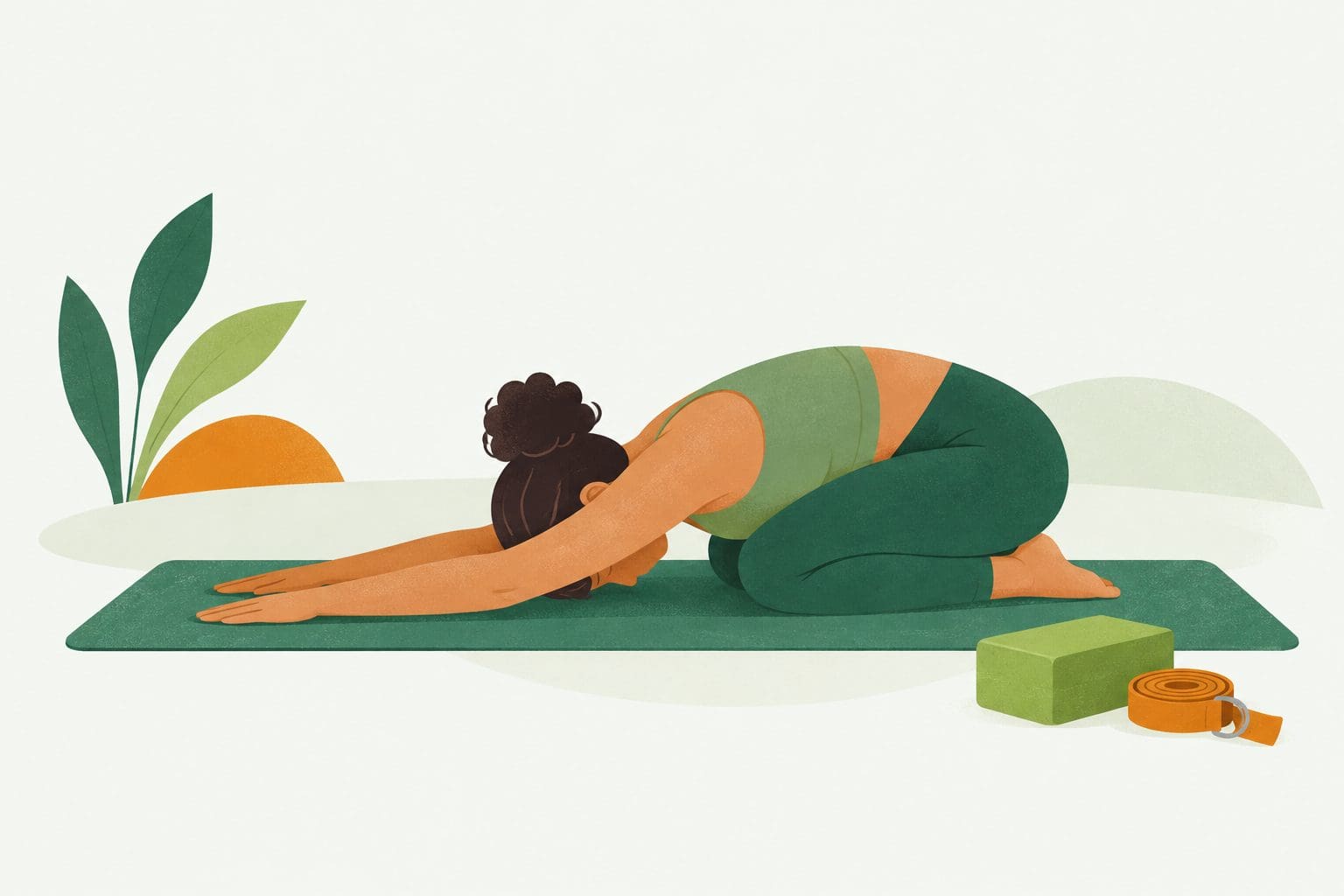
2. Balasana mindful yoga
Balasan yoga can not only help you in practicing mindfulness but also in reducing that rigid lower back pain. It stretches over the inner thighs, chest.
Continuing from the hero pose, stretch your knees wider than your hips and stretch your arms in front of you.
With this position, move your forehead below, touching the ground.
With deep breaths, relax your shoulders. Observe the pattern and the duration of your breaths, to practice mindfulness.
Tighten your throat a little, it will help you caLM YOUR NERVOUS SYSTEM BY CREATING A WAKE LIKE SOUUNd behind your throat. Try to start with staying like this for 1 minute and gradually increasing the time.
3. Seated meditation
Meditating while sitting can help you practice mindfulness a lot. It also helps in stretching out arms, spine.
Continuing from the Balasana pose, try to lift yourself as much as you can, and get into a crossed leg position.
Join your hands at your heart, close your eyes slowly with your palm on your eyes. Observe your breathing. Be in this pose till you want.
After a good 1-2 minutes, inhale and move your arms above your head.
While exhaling, hold your hand in the back, after stretching them out. Repeat this movement while calming down your mind 45 times.
4. Forward foot / Janu Sirasasana
These yoga practices focus on your lower body, i.e your glutes, lower back.
If you are in a seated meditation position. Get your right leg in front of your left leg in a cross position. This will put your heels away from your hips.
Tighten your glutes and don’t put too much pressure. Inhale while moving your arms out and up.
Exhale while putting a stretch on your spine. Move your hand in front of you lifting your hips as well.
Take 10 deep breaths in the same position
Repeat with the second leg in front of the previous one.
5. Lateral bend
Lateral bend, as the name suggests, focuses on your sides and intercostal muscles. It can help you remove air from your joints and experience mindfulness.
Being in the crossed leg position. Put your left hand down on your left side.
While inhaling, move your right hand to your left side, examining a stretch on your sides.
Relaxing your shoulders and moving your head forward on the ground.
Stay there, and have 5 good deep breaths.
Come back in the crossed position and repeat with the other leg this time.
These yoga practices can help you in practicing mindfulness. They can easily be done at home without any equipment whatsoever. At first, they might be a little difficult for you since you weren’t in the habit of moving. But with gradual practice, you can do great. Mindfulness with yoga is more about training your brain to be better than a perfect posture in one go.
Of course, we all want to go to the gym and sweat it out. We all want to practice weights and use all the fancy gym equipment. But there are times when we’re probably just too lazy to get up and go to the gym. Also, unexpected situations like the pandemic have forced us to focus on fitness and work out from home.
In such a scenario, it is a blessing to have an internet connection. Because the world is so tech-savvy today, we have access to some of the best workout routines there are. We can choose the kind of exercises we want to do and whether we want to use any equipment or not. There are ample options for every kind of workout.
Working out from home can be quite a good thing because you don’t have to travel to the gym and you can choose to work out whenever you want to! Here are a few exercises that you can do at home without any equipment.
7 exercises you can do without any equipment
Let’s take a look at all those exercises that will be highly beneficial for you to be fit and tone your body and all of this, without any equipment!
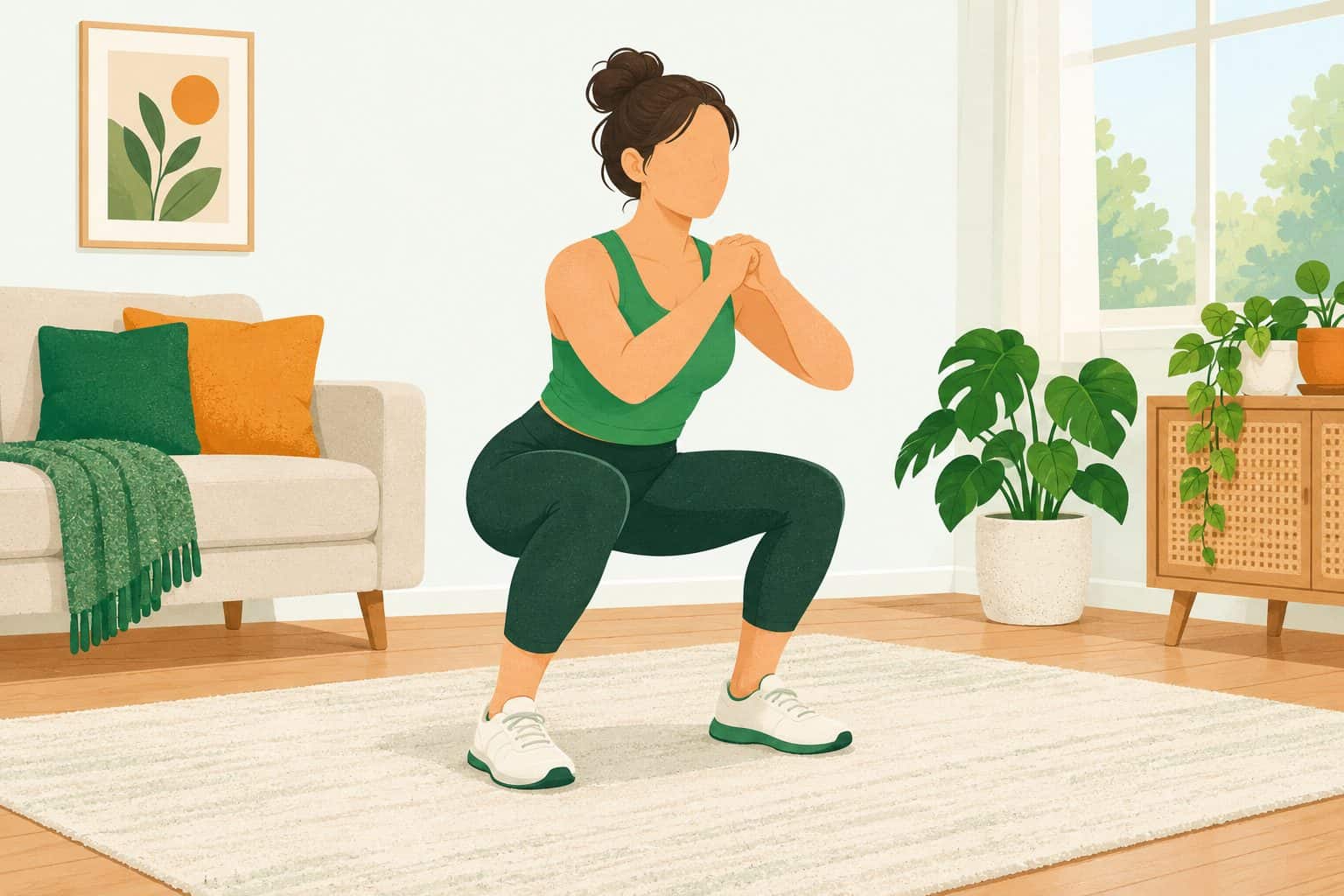
1. Squats
Squats are extremely helpful in strengthening your core and the muscles of your lower body. The best part about squats is that you can do them anywhere, anytime.
How to do Squats?
Firstly, stand tall with your feet a little wider than shoulder-width apart.
Imagine yourself sitting on a chair and sit back and down. With your chest up, push your butt back in a sitting position. Shift all the weight to your heels.
You need to keep lowering your hips until your thighs are parallel to the ground.
The squad that you do must be felt in your thighs and glutes.
You need to pause once your knees are over your toes.
Finally, push back to the original position while exhaling.
2. Push-ups
Push-ups look difficult, but you can do it with great ease once you get the hang of it. Push-Ups strengthen your core while targeting your chest, triceps, and your deltoid muscles.
How to do Push-Ups?
Take the high plank position. Your hands need to be flat on the floor shoulder-width apart and wrists under your shoulders.
Take a deep breath in, bend your arms and lower your chest to the floor while keeping your body straight, engaging your core. If you are not able to do an original push-up, you can do a modified push-up. A modified push-up is the same as a regular push-up. The only difference is that you can lower your knees to the ground in a modified push-up.
Take a deep breath, and then push yourself back up to the starting position.
3. Monster Sumo Walks
This one is for you if you want to reduce your lower body, especially your inner thighs. Monster Sumo Walks work on your glutes, quads, hamstrings, hips, and calves.
How to do Monster Sumo Walks?
Keeping your feet wide apart, do a squat with your thighs being parallel to the ground.
Raise one foot at a time and move forward. Go forward four steps and then come backwards four steps following the same posture.
Repeat the same thing lowering your butt and keeping your thighs wide.
4. Burpees
Want to challenge yourself and test your stamina? Try doing burpees and see where you stand!
How to do a Burpee?
With your arms by your side, stand in a way that your feet are shoulder-width apart. Your weight needs to be in your heels.
Your hips should be pushed back, your knees should be bent, and your body should be lowered into a squat.
Your hands should be directly in front of the floor and inside your feet as well. You need to now shift the entire weight onto your hands.
Jump in such a way that your feet softly land on your toes to form a plank position.
From head to heels, your body should make a straight line. Take care not to let your back slump or your buttocks protrude into the air, as these might prevent you from engaging your core efficiently.
Optional: As you lower yourself, maintain your core engaged and perform a push-up or a dip all the way to the floor. Return to the plank position by performing a push-up to raise your body off the floor.
Do a small backflip such that your feet fall just outside of your palms when you land.
Excitedly jump into the air while raising your arms above your head.
Your following rep will be a squat back to the starting position.
5. Mountain Climber Twist
Mountain Climber Twist is a good way to work your abs, glutes, obliques, hips, and legs. It also strengthens your chest and shoulders and speeds up your metabolism.
How to do a Mountain Climber Twist?
Get on to the plank position with your hands shoulder-width apart.
Raise your left knee forward towards your right elbow and then do the same with your right knee.
Continue this 15 times to form one set. Do 3 such sets.
6. Plank
A plank is quite an interesting no-equipment exercise. It helps in the betterment of your posture, improves metabolism, reduces backaches, strengthens your core, improves body flexibility, and helps in the reduction of body fat.
How to do a Plank?
Begin in the plank position with your forearms and toes on the floor.
Keep your torso straight and rigid. Your body needs to be in a straight line right from your ears until your toes. Ensure that there is no bending or sagging.
Now, relax your head look at the floor.
Hold on to this position for 15 seconds, to begin with. With time, increase it to 30 seconds and more.
7. Lunges
Lunges aid in weight loss and also make your body more balanced and stable.
How to do Lunges?
Stand tall and take a step forward in a way that your leg forms a 90 degree angle. Ensure that your rear knee stays parallel to the ground and your front knee doesn’t cross your toes.
Now, lift the lunging leg so that you can go back to the starting position.
Repeat this process for atleast 10-12 times or alternate between both the legs for a total of 15 times. You can do 3 sets, one set of 15 reps.
Conclusion
Working out from home can be a challenge because there may be no routine or compulsion. Also, laziness is in our blood! However, maintaining a healthy life is of great importance, and hence, you need to start. You need to make a beginning and be consistent. What is even better about these exercises is that they take care of your entire body, and you don’t even need a piece of equipment to do them. Always remember to do warm-up exercises before beginning any workout. Similarly, once you are done with your core workout, make it a point to end your workout with cooling exercises.
Anger doesn’t solve anything. It builds nothing, but it can destroy everything.
If you are a human, it is almost impossible never to get angry at all. Many situations and people can throw you off guard and make you feel stress, resulting in anger even. We hear most people around us schooling us about how bad anger can be for our overall development. It’s true, of course. However, when anger is dealt with maturely, it can even be productive and induce rational thinking. The problem arises when one cannot figure out the way to let all that anger go. When feelings, thoughts, emotions, stress, and anger are all pent up inside a person’s mind, heart, and soul, that is when the real problem starts.
If you think closely about it, who is the one who loses the most from anger? Is it the one you got angry with, or is it you, yourself? Whether you are expressing your anger out loud or keeping it bundled inside, the loss is yours. Bottled-up anger can destroy your relationships and affect your entire thinking process. Let’s talk about how harmful can hold your anger be for you!
7 Harmful effects of holding your anger
Here are the most significant adverse effects of holding your anger:
1. Heart risk
Your heart is a delicate organ. Emotions as strong as anger can cause great harm to it. Research shows that when you have an angry outburst, the chances of you getting a heart attack doubles. Repressing your anger for far too long can be the beginning of your journey into the world of heart diseases and problems.
The only solution to this is to learn to manage your anger more constructively. Identify your triggers and work on them. Consider addressing the problem at hand than just getting angry and keep it inside you!
2. Anger weakens your immune system
If you are a person who always has anger lingering around him/her, you can be prepared to find yourself falling sick more often than not. In one study, the researchers from Harward University found that when healthy people recall an unpleasant incident from their past, the level of their antibody- Immunoglobulin A saw a six-hour dip! Immunoglobulin A is responsible for fighting against infection in your body!
People who worry often experience both anxiety and rage at the same time. One of the studies published in the journal Cognitive Behavior Therapy indicated that anger could aggravate the symptoms of a generalized anxiety disorder (GAD). GAD is a condition where a person is troubled with an excessive and uncontrollable concern in his daily life. Apart from having higher levels of hostility, patients with GAD also had more severe GAD symptoms due to hostility and internalized, unexpressed rage.
Anxiety is dangerous and could be the stepping stone to a lifetime of anxiety issues. Hence, it becomes vital to pay heed to this as soon as possible and learn to let out your emotions constructively. Self-introspection, when you are calm, can help. Take some time out for yourself, preferably early morning, and meditate. Practice deep breathing and think deeply about the causes that make you angry and your responses to those causes.
4. Holding anger can increase chances of stroke
Be on the lookout if you have a tendency to lash out. According to one study, the chance of suffering a stroke increases threefold in the two hours following an angry outburst due to a blood clot in the brain or internal bleeding in the brain. Six times as many people had aneurysms in one of the brain’s main arteries when they were upset, compared to those who didn’t become angry.
5. Bottled up anger can also hurt your lungs
Smoking isn’t your thing? Well, it turns out smoking is not the only thing that could harm your lungs. If you are always angry or hostile, you could be unknowingly giving your lungs a hard time.
Researchers reviewed the medical records of 670 men ranging in age from 45 to 86. First, they used a scale from 1 to 37 to measure each man’s level of rage and hatred. Then, over the course of eight years, they took three distinct lung function measurements to see how much air could be expelled in a second.
Anger and hostility were associated with lower lung function at the onset, and this relationship worsened with each subsequent evaluation of these males. Thorax researchers found that their findings stayed up even after accounting for other variables like smoking and education.
6. It can also lead to depression
When you suppress your anger for long periods of time, you pile up many more emotions along with it. This affects your overall attitude towards life and your behavior as well. Your mind subconsciously keeps remembering all those reasons why you got angry, and before you realize it, you are already falling into a bottomless pit. As a result of all of this, you can see your relationships affected by your behavior and many other issues like headaches, skin disorders, high blood pressure, sleep disorders, and even digestive problems.
7. Suppressing anger shortens your life
Haven’t we all heard of the famous saying, “Happier people live longer?” Perhaps, that is the truest saying there is. If you really sit and think about it, life is unpredictable and, anyway, too short. Why waste it by being angry and hostile?
Anger, if not channeled in the right direction, could ruin not just your life but also the lives of those who are close to you and those who worry about you! Hence, it is crucial to feel every emotion and find the proper care that it needs! Of course, the journey won’t be easy, but all the struggles in the journey will make you a balanced individual in life!
Cookies, only if you say yes. We would like to use Google Analytics and the Mailchimp site script to see which articles help. Nothing loads until you choose. Privacy policy