Types of yoga for beginners
Which style suits a sore back and a busy week.
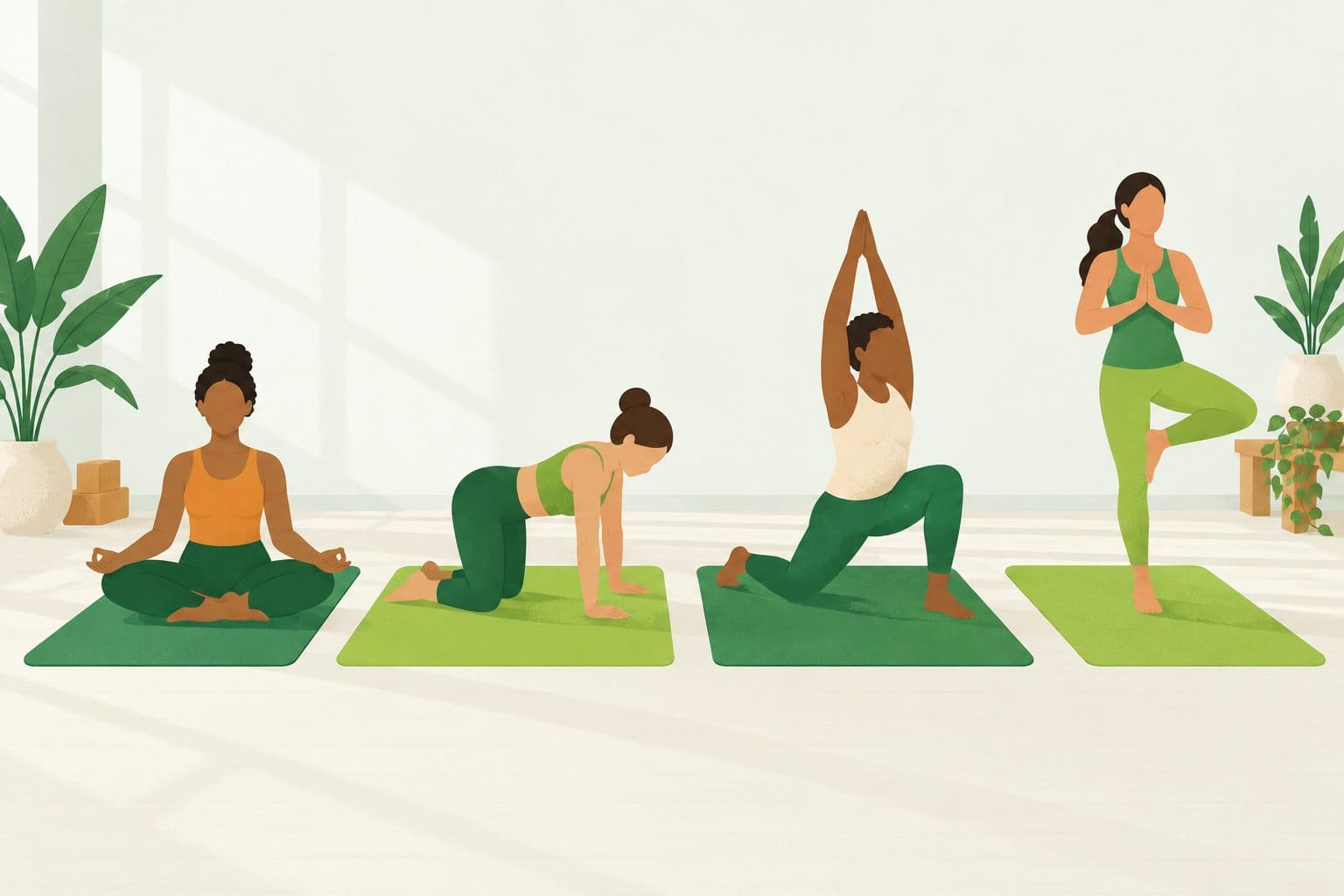
If you’ve been thinking about starting yoga but feel overwhelmed by all the different styles, you’re not alone. Walk into any yoga studio or scroll through YouTube and you’ll find dozens of options — Vinyasa, Hatha, Yin, Ashtanga, Kundalini, Restorative — and no clear guide on where to begin.
The truth is, the “best” type of yoga for a beginner depends entirely on what you need. Are you looking to de-stress after a long day at your desk? Build strength and flexibility? Sleep better? Heal a stiff back from hours of sitting?
This guide breaks down the most popular types of yoga for beginners, what each one feels like, who it’s best suited for, and exactly how to get started — even if you’ve never set foot on a yoga mat before.
What Is Yoga and Why Should Beginners Care?
The word yoga comes from the Sanskrit word “Yuji” meaning union — the practice of bringing together the body, mind, and breath. While yoga originated thousands of years ago in South Asia, modern research backs up what practitioners have known for centuries: regular yoga practice reduces stress, improves flexibility, builds strength, and supports mental health.
For people who work long hours at a desk — particularly those in IT and office environments — yoga is especially valuable. It counteracts the physical damage of prolonged sitting: tight hips, stiff shoulders, poor posture, and lower back pain. Even 20 minutes a day can make a significant difference.
But before you start, it’s worth understanding that not all yoga is the same. Each style has a different pace, focus, and physical demand. Choosing the right type from the beginning makes it far more likely you’ll stick with it.
7 Best Types of Yoga for Beginners (With Honest Guidance)
1. Hatha Yoga — The Best Starting Point for Absolute Beginners
Best for: Complete beginners, older adults, people returning after injury, desk workers with stiffness
Hatha is the foundation of all modern yoga styles. The word means “forceful” in Sanskrit, but don’t let that intimidate you — Hatha classes today are typically slow-paced, gentle, and focused on holding basic poses with attention to alignment and breathing.
In a Hatha class, you’ll hold each pose for several breaths before moving to the next. There’s no rushing, no flow sequences, and plenty of time to understand what your body is doing. This makes it the ideal entry point for anyone new to yoga.
What to expect: A 60-minute class covering 10–15 foundational poses like Mountain Pose (Tadasana), Child’s Pose (Balasana), Downward Facing Dog, and Warrior I. Classes often end with a short relaxation (Savasana).
Key poses for beginners:
- Mountain Pose (Tadasana): Stand with feet together, weight evenly distributed, arms at your sides with palms facing forward. This deceptively simple pose teaches correct posture and body awareness — essential for desk workers.
- Child’s Pose (Balasana): Sit on your heels and fold forward, arms extended or resting alongside the body. A gentle stretch for the hips, lower back, and shoulders — perfect after a long day of sitting.
- Cat-Cow (Marjaryasana-Bitilasana): On all fours, alternate between arching and rounding your spine in sync with your breath. One of the best poses for relieving lower back tension from desk work.
Tip: Start with 2–3 Hatha sessions per week. Once you’re comfortable with basic poses, you can explore more dynamic styles.
2. Vinyasa Yoga — For Beginners Who Want to Move and Build Fitness
Best for: People who find stillness boring, those wanting a cardio element, fitness-focused beginners
Vinyasa connects breath to movement in a flowing sequence. Unlike Hatha where you hold poses statically, Vinyasa moves you from one pose to the next in a continuous flow. It’s more dynamic and physically demanding, but many beginners prefer it because the movement keeps the mind engaged.
The most famous Vinyasa sequence is the Sun Salutation (Surya Namaskar) — a series of 12 poses performed in a flowing sequence that warms up the entire body.
What to expect: A faster-paced class where you’ll be moving almost constantly. Expect to sweat. Beginners should look for classes labelled “Vinyasa Flow for Beginners” or “Slow Flow.”
Key poses for beginners:
- Sun Salutation (Surya Namaskar): The backbone of Vinyasa practice. Start with 3–5 rounds each morning to build strength, flexibility, and body awareness simultaneously.
- Downward Facing Dog (Adho Mukha Svanasana): An inverted V-shape with hands and feet on the ground. Stretches the hamstrings, calves, and spine while building arm and shoulder strength.
- Low Lunge (Anjaneyasana): A deep hip-flexor stretch that counteracts the tightening effect of prolonged sitting.
Tip: Vinyasa is excellent for IT professionals and desk workers who want to build overall fitness alongside flexibility. Try pairing it with our [10-minute morning yoga routine] for maximum benefit.
3. Yin Yoga — For Deep Relaxation and Stress Relief
Best for: Stressed, anxious, or exhausted beginners; people with tight hips or lower back; those who sit all day
Yin Yoga is the antidote to a fast-paced, screen-heavy life. Where most yoga styles are “yang” (active, strengthening), Yin is passive and meditative. You hold poses for 3–5 minutes each, allowing gravity and time to gently release deep connective tissue — fascia, ligaments, and joints that other forms of exercise rarely reach.
Yin Yoga is especially beneficial for anyone who carries tension in the hips and lower back — which describes most office workers. It also has a deeply calming effect on the nervous system, making it perfect for evening practice before bed.
What to expect: A slow, quiet class with perhaps 8–12 poses held for several minutes each. Expect to use props like bolsters, blankets, or blocks. Some discomfort is normal as connective tissue releases — but it should never be sharp or painful.
Key poses for beginners:
- Butterfly Pose (Baddha Konasana): Sit with the soles of your feet together and fold gently forward. Opens the inner hips and groin — an area notoriously tight in desk workers.
- Caterpillar Pose (Paschimottanasana): Seated forward fold with legs extended. Releases the entire back of the body from heels to the back of the skull.
- Sleeping Swan (variation of Pigeon Pose): A deep hip opener held passively for 3–5 minutes per side. Transformative for hip tightness and lower back pain.
Tip: Practice Yin Yoga in the evening, 2–3 times per week. Combine it with our guide on how to sleep better for a powerful wind-down routine.
4. Ashtanga Yoga — For Disciplined Beginners Who Want Structure
Best for: People who thrive on routine and structure; those wanting a serious physical practice
Ashtanga is a rigorous, structured system of yoga with a fixed sequence of poses always practiced in the same order. It demands discipline and builds significant strength and flexibility over time. The eight limbs of Ashtanga (Yamas, Niyamas, Asanas, Pranayama, Pratyahara, Dharana, Dhyana, and Samadhi) form a complete philosophical system, not just a physical practice.
Beginners start with the “Primary Series” — a set sequence of around 75 poses. While challenging, Ashtanga’s repetitive nature means you quickly learn the sequence and can track your progress clearly.
What to expect: A demanding 60–90 minute class. Beginners should look for “Ashtanga Mysore” style classes where you work at your own pace with individual teacher guidance.
Key poses for beginners:
- Chair Pose (Utkatasana): Stand with feet together, bend the knees as if sitting in a chair, arms raised. Builds leg strength and improves posture.
- Warrior I (Virabhadrasana I): A powerful standing pose that builds lower body strength and opens the chest — great for counteracting the slouching posture of desk work.
- Corpse Pose (Savasana): Always the final pose — lie flat on your back and completely relax. More important than it looks; this is where the body integrates the benefits of the practice.
5. Kundalini Yoga — For Spiritual Beginners and Stress Relief
Best for: People interested in the spiritual dimension of yoga; those dealing with anxiety, burnout, or low energy
Kundalini is a unique and powerful system that combines physical postures, breathwork (pranayama), meditation, and chanting (mantras). The goal is to awaken the “kundalini energy” believed to reside at the base of the spine and channel it upward through the chakras.
Kundalini classes can feel very different from other styles — expect kriyas (specific exercise sets), breathwork sequences, and possibly chanting. While it may feel unusual at first, many practitioners report profound shifts in energy levels, mood, and mental clarity.
What to expect: A 60–90 minute class with a mix of movement, breathwork, and meditation. No prior experience needed.
Key practices for beginners:
- Breath of Fire (Kapalabhati): Rapid rhythmic breathing through the nose. Energising and detoxifying — great for overcoming afternoon slumps.
- Frog Pose (Mandukasana): Squatting wide with forearms on the floor, used in dynamic repetition sequences to build energy and release tension.
- Camel Pose (Ustrasana): A deep backbend that opens the heart centre and counteracts the forward-hunching posture of desk work.
6. Restorative Yoga — The Gentlest Option for Exhausted Beginners
Best for: People recovering from illness or injury, those experiencing burnout or chronic fatigue, complete beginners who feel intimidated by movement
Restorative Yoga takes Yin’s gentle approach even further. In a Restorative class, you may hold just 4–6 poses for the entire session, each supported by props (bolsters, blankets, blocks) so the body is completely passive. There is zero muscular effort required.
The goal is pure nervous system restoration — activating the parasympathetic “rest and digest” response and switching off the stress response. For anyone living with chronic stress, poor sleep, or physical exhaustion, Restorative Yoga is genuinely therapeutic.
Tip: Try one Restorative session per week as a complement to more active practices.
7. Chair Yoga — For Beginners With Limited Mobility
Best for: Older adults, those with injuries or chronic pain, people who are truly inflexible and feel intimidated by floor work
Chair Yoga adapts traditional yoga poses to be performed while seated in a chair or using a chair for support. Every pose from a standing or seated practice can be modified for chair yoga — including forward folds, twists, hip openers, and even simple inversions.
This is a wonderful entry point for anyone who feels too stiff, too inflexible, or too intimidated to try traditional yoga.
How to Choose the Right Type of Yoga for You
Use this simple guide:
| Your Goal | Best Yoga Type |
|---|---|
| Complete beginner, no experience | Hatha |
| Want to build fitness and lose weight | Vinyasa |
| Stress relief and deep relaxation | Yin or Restorative |
| Spiritual growth and energy work | Kundalini |
| Disciplined, structured practice | Ashtanga |
| Limited mobility or recovering from injury | Chair Yoga or Restorative |
| Tight hips and lower back from desk work | Yin or Hatha |
| Busy schedule, want quick results | Vinyasa |
Tips for Starting Yoga as a Complete Beginner
1. Don’t wait until you’re flexible. Yoga is how you become flexible — you don’t need to be flexible to start. This is the most common misconception that stops people from beginning.
2. Start with short sessions. Even 15–20 minutes three times a week will produce noticeable changes within a month. You don’t need a 90-minute session to benefit.
3. Invest in a good mat. A non-slip mat with adequate cushioning makes a significant difference to your comfort and safety. This is the one piece of equipment worth spending on.
4. Learn to breathe correctly. Yoga breathing (pranayama) is as important as the poses. In general, you inhale to open and expand the body, exhale to fold or contract. Matching breath to movement is what separates yoga from regular stretching.
5. Don’t compare yourself to others. Every body is different. The person next to you may have been practicing for years. Focus entirely on your own body and your own breath.
6. Consistency beats intensity. Three gentle sessions per week for a month will do more for you than one intense session followed by a week off. Build the habit first, then build the intensity.
Frequently Asked Questions About Types of Yoga for Beginners
Q: Which type of yoga is best for absolute beginners?
Hatha Yoga is the most recommended starting point for complete beginners. It’s slow-paced, focuses on foundational poses, and gives you time to understand alignment and breathing without feeling rushed. Once you’re comfortable with the basics, you can explore other styles.
Q: Can I do yoga if I’m not flexible at all?
Absolutely. Flexibility is a result of yoga practice, not a prerequisite for it. Every pose has modifications for people who are stiff or inflexible. Start where you are — even basic poses will produce noticeable improvement within a few weeks.
Q: How many times a week should a beginner do yoga?
Start with 2–3 sessions per week of 20–30 minutes each. Consistency matters far more than duration. Once yoga becomes a habit — usually after 3–4 weeks — you can increase frequency or session length.
Q: Is yoga enough exercise on its own?
It depends on the style. Vinyasa and Ashtanga can provide a complete cardiovascular and strength workout. Yin and Restorative are better as complements to other exercise rather than standalone fitness activities. For desk workers, combining Vinyasa 2–3 times per week with daily walking is a highly effective combination.
Q: What is the difference between Hatha and Vinyasa yoga?
Hatha yoga involves holding each pose statically for several breaths, focusing on alignment and stillness. Vinyasa connects poses in a flowing sequence synchronised with the breath — more like a moving meditation. Hatha is gentler and better for beginners; Vinyasa is more dynamic and physically demanding.
Q: Can yoga help with back pain from sitting at a desk all day?
Yes — yoga is one of the most effective remedies for desk-related back pain. Styles like Hatha and Yin specifically target the hip flexors, hamstrings, and lower back muscles that tighten from prolonged sitting. Even 15 minutes of targeted yoga after work can significantly reduce discomfort over time.
Q: Do I need any equipment to start yoga?
A good non-slip yoga mat is the only essential. Many poses also benefit from a folded blanket or firm cushion (used as a substitute for a yoga block). You don’t need special clothing — comfortable, stretchy clothes that allow free movement are sufficient.
Final Thoughts
The best type of yoga is the one you’ll actually practice consistently. If you’re a complete beginner, start with Hatha to learn the foundations. If you need stress relief, try Yin. If you want a workout, explore Vinyasa. And if you’re spiritual curious, Kundalini might be your path.
What matters most is that you start — and that you keep going. The benefits of yoga compound over time: what feels impossible today will feel natural in a few months. And for anyone spending long hours at a desk, your body will thank you more than you can imagine.
For your next step, check out our guides on 10 quick yoga tips for beginners and 6 yoga exercises for mindfulness to deepen your practice.